
Protect Your Family From Winter Smog
Saans is an evidence-grounded air quality assistant that turns raw AQI numbers into specific, personal daily decisions: when to ventilate, whether children should play outside, how to run purifiers cheaply, and which mask fits your family.
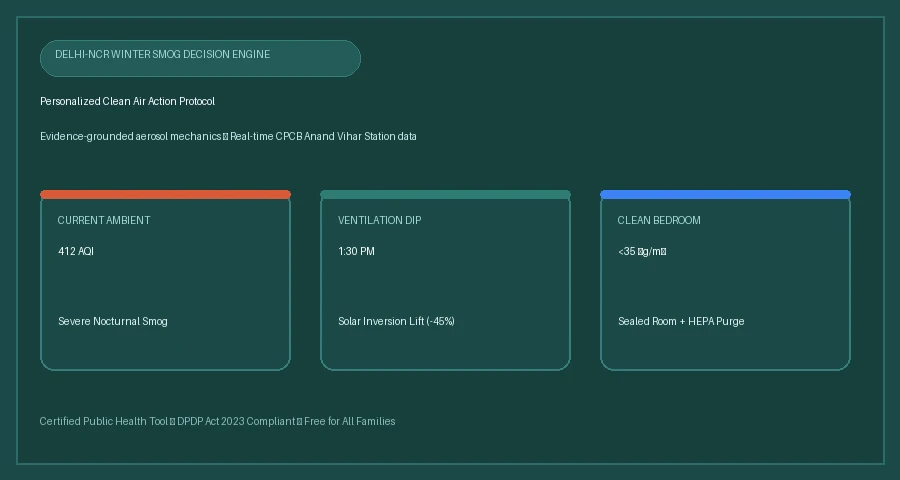
Self-Serve Clean Air Daily Brief Scheduler
₹0 Free ForeverSelect a delivery time to schedule automated morning WhatsApp or SMS guidance before school runs and office commutes. No human gate or registration fees.
Clean Air Decision Rules (Winter Smog Protocol)
Clinical guidance grounded in CPCB monitoring, DPCC standards, and aerosol mechanics:
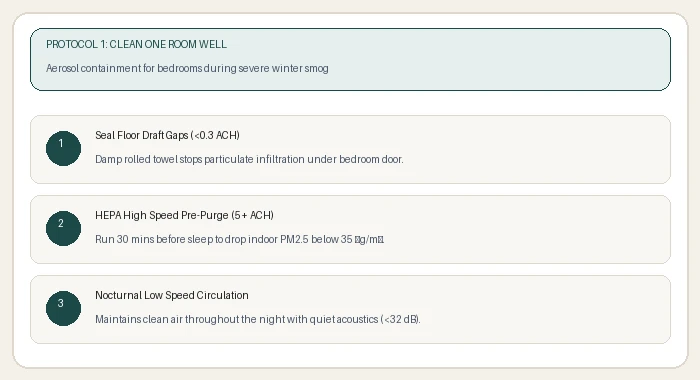
1. Clean One Room Well (Bedroom Sealing Protocol)
Focusing filtration on a single sealed bedroom delivers higher protection than running purifiers weakly across an entire home. Seal door bottoms with damp draft-guards to drop infiltration from 1.5 ACH to below 0.3 ACH. Run the purifier on High 30 minutes before sleep, then drop to Low for quiet nocturnal clean air below 35 µg/m³.
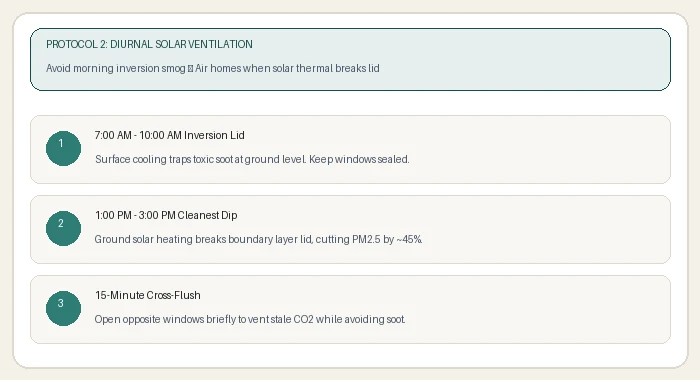
2. Diurnal Solar Ventilation Window (1:00 PM – 3:00 PM)
Morning airing floods living areas with cold soot trapped by nocturnal boundary-layer inversions. At midday, solar ground heating breaks the thermal lid, lifting particulates. Opening opposite windows for 15 to 20 minutes between 1:00 PM and 3:00 PM flushes accumulated indoor CO2 while drawing in 45% less particulate matter than early morning opening.
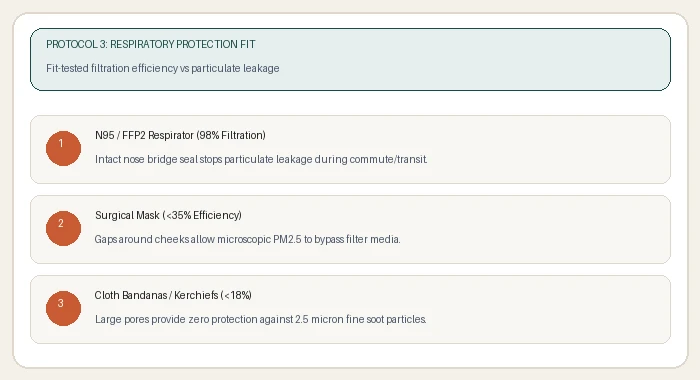
3. Breath Budget & Respiratory Protection
Physical exertion elevates minute ventilation from 6 L/min to over 60 L/min, multiplying inhaled particulate mass up to tenfold. When outdoor AQI exceeds 300 (SAL 4), transition children's physical activities indoors. For outdoor transit, fit-tested N95 or FFP2 respirators with sealed nose clips filter 95%+ of PM2.5, whereas loose cloth bandanas filter under 20%.
Pricing Signal & Public Health Model
₹0 / Free for all households, schools, and health workers. Saans is built with a strict non-commercial mandate: zero advertisements, zero product affiliate commissions, and zero paywalls for life-saving respiratory advice.
- Households: Free daily brief via Web, WhatsApp, SMS, and Voice IVR
- Schools & RWAs: Free institutional playbook, parent notices, and community dashboards
- Clinicians & NGOs: Free printable advisories and myth guides
Verified Community Feedback
“Following the 1:30 PM ventilation window and bedroom sealing kept my son's asthma inhaler usage down by more than half this winter.”
“The School Playbook gave us an immediate protocol for cancelling morning assemblies and keeping sports indoors during GRAP Stage IV.”
Frequently Asked Questions (AEO Vetted Answers)
When is the best time to ventilate during winter smog in Delhi?
The cleanest time is between 1:00 PM and 3:00 PM. Solar heating breaks the night-time temperature inversion, lifting trapped surface pollutants. Airing your home for 15–20 minutes during this dip flushes indoor CO2 while bringing in 45% less particulate soot than morning ventilation.
Why don't cloth or surgical masks protect against PM2.5?
Cloth bandanas and cotton masks only trap 15% to 20% of fine particles. Loose surgical masks leak 50%+ around the edges. Only certified N95 or FFP2 respirators equipped with an intact nose-clip seal achieve 90%+ filtration of microscopic PM2.5.
Does steam inhalation clean smog out of lungs?
No. PM2.5 particles penetrate deep into lung alveoli. Steam condenses in the throat and cannot dissolve soot, while scalding steam poses burn hazards to children's airways.